Quick Answer
Yes, freelancers, self-employed professionals, and business owners can apply for Singapore PR, but the pathway is different from that of a salaried Employment Pass holder. Instead of an employer’s sponsorship, ICA looks at your business registration, income stability, tax records, and CPF contributions as a self-employed person. Applicants who hold an EntrePass, run an ACRA-registered company, or have a consistent, well documented freelance income over several years have the strongest cases. Irregular income and thin documentation are the biggest obstacles.
Key Takeaways
- Freelancers and self-employed professionals are eligible to apply for Singapore PR under the Professional, Technical, and Skilled Worker (PTS) scheme or the entrepreneur pathway.
- ICA places extra weight on income consistency, tax filings, and CPF contributions for self-employed applicants.
- EntrePass and business owners can apply for PR through routes tied to their company’s performance and local economic contribution.
- Two or more years of consistent, documented self-employed income strengthens an application significantly.
- Voluntary CPF contributions and IRAS Notices of Assessment are important supporting evidence for self-employed applicants.
- A well organised business or professional portfolio helps compensate for the absence of an employer’s sponsorship letter.
Is Singapore PR Possible For Freelancers And The Self-Employed?
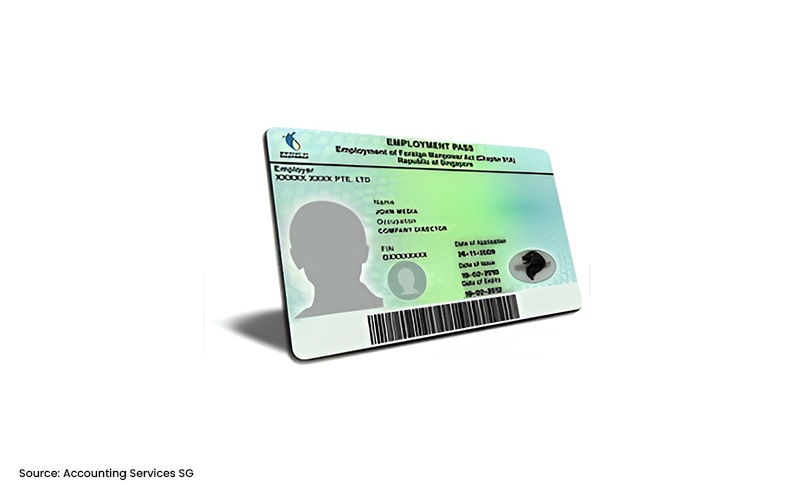
Yes. Singapore does not require applicants to hold an Employment Pass or be sponsored by an employer to apply for PR. Self-employed professionals, sole proprietors, business owners, and freelancers can apply under the Professional, Technical, and Skilled Worker (PTS) scheme, the same general channel used by most working professionals, or through routes more specific to entrepreneurs and investors.
The difference is not eligibility but documentation. A salaried Employment Pass holder can point to a single employer, a fixed salary, and consistent CPF contributions. A freelancer or business owner has to build that same picture themselves, through tax records, invoices, business registration documents, and voluntary CPF contributions.
Pathways Available To Self-Employed Applicants
- PTS scheme with self-employed income. Freelancers and consultants with a stable client base and consistent income over time can apply through the general PTS route, supported by IRAS tax records instead of a payslip.
- Business owners and company directors. Those running an ACRA-registered company in Singapore can apply based on the company’s performance, local hiring, and their own contribution to the business.
- EntrePass holders. Entrepreneurs who entered Singapore on an EntrePass and have built a functioning, revenue generating business over time have a defined pathway toward PR, tied to business milestones such as local headcount and paid-up capital.
- Global Investor Programme (GIP). For established business owners and investors making a substantial capital commitment, this is a faster, investment-based route to PR, though it requires significantly higher capital than other pathways.
Documents Self-Employed Applicants Need
Because there is no employer to vouch for your income, self-employed applicants generally need to prepare:
- IRAS Notices of Assessment for at least the past two to three years
- ACRA business registration or company profile (BizFile)
- CPF voluntary contribution statements, if applicable
- Bank statements showing consistent income deposits
- Client contracts or invoices demonstrating an ongoing income stream
- A cover letter explaining your business model, client base, and reason for applying
What Makes A Self-Employed PR Application Strong

The strongest self-employed applications share a few traits: income that has grown or at least remained stable over several years, tax filings that match the income claimed, voluntary CPF contributions that show a long-term financial commitment to Singapore, and a business or professional practice that is clearly tied to Singapore rather than run remotely from abroad.
Diversifying your client base also matters. An applicant who works with a single client on a long-term contract may be viewed similarly to a salaried employee, while one who has built a broad base of clients and consistent revenue over time demonstrates a more resilient, self-sustaining business.
Common Challenges For Freelancers And Business Owners
Self-employed applicants tend to run into a few recurring issues:
- Irregular or seasonal income that is harder to present as stable
- Under-declared income for tax purposes, which then conflicts with the income claimed in the PR application
- No CPF contribution history, since CPF is not mandatory for the self-employed in the same way it is for employees, though Medisave contributions are compulsory for eligible self-employed persons
- New businesses without a track record, which may need to wait until they have at least one to two years of consistent filings before applying
Self-Employed Vs Employed PR Applicants
| Factor | Salaried EP Holder | Self-Employed or Business Owner |
| Income proof | Payslips, employer letter | IRAS NOA, bank statements, invoices |
| Sponsor | Employer | None, or own company |
| CPF contributions | Mandatory, employer paid | Voluntary, or Medisave for eligible self-employed |
| Track record needed | Often 2 to 3 years with one employer | Typically 2 or more years of consistent filings |
| Key risk factor | Frequent job changes | Irregular or under-documented income |
| Common pathway | PTS scheme | PTS scheme, EntrePass route, or GIP |
Real Example: A Freelancer’s Successful PR Application
A UX design consultant who had been freelancing in Singapore for four years, working with a rotating base of six to eight regional clients, applied for PR with a portfolio that included three years of IRAS Notices of Assessment showing steadily rising income, a BizFile registration for her sole proprietorship, voluntary Medisave contributions, and letters from two long-term clients describing the nature and duration of their working relationship. Her cover letter framed her freelance practice as a stable, Singapore-based business rather than a series of one-off gigs. The application was approved on her first attempt.
Expert Insight
The biggest mistake self-employed applicants make is treating their tax filings as an afterthought. ICA cannot call your employer to verify your income, so your IRAS records effectively become your primary evidence. If those records are incomplete, inconsistent, or understate your actual earnings, it undermines the rest of the application regardless of how strong your business otherwise looks. Getting your tax filings and CPF or Medisave contributions in order well before you apply is often more important than any other single step for self-employed applicants. For a step-by-step look at building a stronger overall profile, see our guide on strengthening your Singapore PR profile. If you are weighing whether to apply as an individual or through your company, our comparison of individual versus corporate PR applications explains the differences in more depth.
Frequently Asked Questions
Can freelancers apply for Singapore PR?
Yes. Freelancers can apply through the PTS scheme, supported by tax records, business registration, and evidence of consistent income, rather than an employer’s sponsorship letter.
Can self-employed people get Singapore PR?
Yes, self-employed individuals are eligible, though they typically need a longer, better documented track record of income and tax compliance than salaried applicants.
How can business owners apply for Singapore PR?
Business owners can apply based on their company’s local performance, headcount, and revenue, particularly if they entered Singapore on an EntrePass or have grown an ACRA-registered company over several years.
Is Singapore PR possible for entrepreneurs?
Yes. Entrepreneurs on an EntrePass have a defined pathway to PR tied to business milestones, while established business owners with larger capital may also consider the Global Investor Programme.
Singapore PR for digital freelancers and remote workers, is it possible?
It is possible if your freelance income is earned through a Singapore-based practice with consistent local tax filings. Purely remote work for overseas clients with no local business presence is generally a weaker basis for a PR application.
Singapore PR for company directors, what is required?
Company directors typically need to show the business is active, compliant with ACRA and IRAS filings, and contributing to the local economy, alongside their personal income and CPF or Medisave records.
What documents are required for self-employed Singapore PR applications?
Key documents include IRAS Notices of Assessment, ACRA business registration, bank statements, client contracts or invoices, and CPF or Medisave contribution records.
Does Singapore PR require an employer at all?
No. While most applicants are Employment Pass holders, ICA’s PTS scheme and entrepreneur pathways do not require an employer, you can demonstrate stable, verifiable income and a genuine link to Singapore.
Did You Know?
Under the Personalised Employment Pass framework, the Ministry of Manpower explicitly excludes freelancers and sole proprietors from that particular pass category, which is one reason most self-employed applicants pursue Singapore PR through the general PTS scheme or the entrepreneur pathway instead, according to MOM’s official eligibility criteria.
Related Reading:
- How Foreign Entrepreneurs Can Set Up a Business in Singapore
- Key Benefits of Converting EntrePass to PR for Entrepreneurs
- Guide to Applying for Singapore PR Through the PTS Scheme
- Singapore PR Applications: Do Tech Pass Holders Have an Edge?
- Your Complete Guide to Becoming a Singapore PR
External References:
- Ministry of Manpower, Eligibility for Personalised Employment Pass
- Accounting and Corporate Regulatory Authority, ACRA