Key Takeaways
- PR application timeline varies: Expect 4–12 months depending on profile strength, completeness, and ICA workload.
-
- Delays aren’t always negative: Longer waits often reflect a thorough review or internal backlogs, not automatic rejection.
-
- Use the waiting period wisely: Strengthen your PR eligibility, contribute to the community, and prepare for future steps.
-
- Avoid premature follow-up enquiries to ICA, these can sometimes backfire.
- If there is no status update after 12 months, a single polite enquiry through the ICA e-Service portal is appropriate.
-
Introduction: Why The PR Timeline Feels So Uncertain
Are you eagerly waiting to find out if your Singapore permanent residence application has been approved? Do you check your inbox every day, wondering if there is news from ICA? Or maybe you are just about to submit your PR application and are curious about how long the process actually takes.
Understanding the Singapore PR application timeline can make the waiting period less stressful and help you plan your next steps. The honest answer is that no two applications move at the same speed, and that is completely normal.
In this guide, we break down exactly what happens between submission and outcome, what the different wait durations actually signal, and how to use the waiting period to your advantage. Whether you submitted last week or have been waiting nine months already, there is practical clarity ahead.
1. The Standard Singapore PR Processing Timeline (4 to 12 Months)
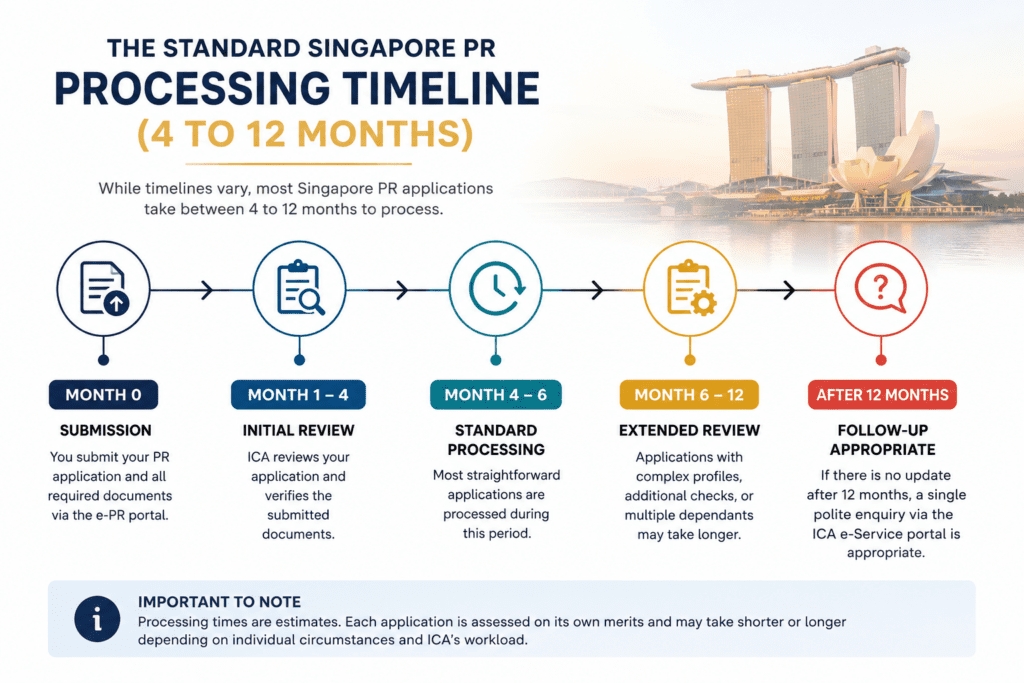
While the Immigration & Checkpoints Authority (ICA) officially states that processing usually takes 4–6 months, many applicants experience longer waits, sometimes 9–12 months, depending on factors such as profile strength, application periods, and internal workloads.
It’s important to remember that there’s no fixed duration. Each application is reviewed individually, and your profession, salary tier, and the completeness of your submission can influence how quickly your case is processed. By knowing this standard PR application timeline, you can set realistic expectations and avoid unnecessary worry.
Key Factors That Affect Your Singapore PR Processing Time
Profile complexity: Applications involving multiple dependants, self-employment, or unusual employment histories take longer to assess.
Submission completeness: Incomplete or inconsistently presented documents may trigger additional rounds of internal review.
ICA workload: Application volumes fluctuate seasonally, which affects how quickly cases move through the queue.
Profile tier: Applications near the approval threshold require more thorough evaluation by ICA panels.
Nationality and background checks: Certain nationalities or employment sectors may require extended security screening.
| Important context for 2026:Singapore has announced plans to increase annual PR intake to approximately 40,000 over the next five years, up from around 35,000 granted in 2024. While the pool is slightly larger, the applicant volume remains in the range of 100,000 to 120,000 per year, which means wait times are unlikely to shorten significantly. |
Singapore PR Processing Timeline At A Glance
| Phase | Timeframe | What to do |
|---|---|---|
| Submission | Month 0 | Confirm all docs uploaded correctly via e-PR portal |
| Initial review | Months 1–4 | Continue community involvement, update professional records |
| Standard processing | Months 4–6 | Most straightforward cases resolved here |
| Extended review | Months 6–12 | Complex profiles, multiple dependents, additional vetting |
| Follow-up appropriate | After 12 months | One polite ICA enquiry via e-Service portal is reasonable |
2. What Happens Behind The Scenes During The Wait

It may feel like nothing is happening while you wait, but your permanent residence application is going through multiple levels of review. These checks include document verification, background vetting, and sometimes higher-level ICA panel assessments.
Even if you don’t receive updates, your case is rarely idle. Applications with multiple dependents or unique circumstances often take longer, as each detail is carefully considered. Understanding this behind-the-scenes activity can help you see that delays often mean thorough evaluation rather than a negative outcome.
Here is what typically occurs after submission:
-
- Document verification: ICA checks that all submitted files are valid, current, and consistent with the information declared in the e-PR System.
-
- Background vetting: Employment records, tax history, and any prior immigration matters are cross-referenced.
-
- Profile assessment: ICA evaluates economic contribution, integration potential, and long-term commitment to Singapore.
-
- Panel review (if required): Applications near the decision boundary may be escalated to a senior panel for review.
| What SGIP consultants see in practice:Many of our clients who received approval were among those who waited the longest. A longer review process frequently correlates with a more borderline profile that is ultimately cleared, not with rejection. If ICA intended to reject your application quickly, a protracted wait would be unnecessary. |
3. What Delays In Singapore PR Processing Actually Indicate

A long wait doesn’t automatically signal bad news. Delays in the PR application timeline can occur due to deeper scrutiny. For instance, examining your employment pass history, or simply because of internal backlogs during peak application periods.
Key signs to watch: if there’s no status change after 12 months, a polite enquiry may be warranted. Premature follow-ups, however, can sometimes backfire. Often, delays are just part of the process and don’t reflect on your eligibility or the quality of your submission.
Common reasons for longer processing
- Deeper scrutiny of employment history: ICA may be reviewing your progression across multiple employers or pass types.
-
- Internal backlogs: Peak application periods can slow processing across the board.
-
- Additional information requirements: ICA may require further documentation internally before reaching a conclusion.
-
- Panel escalation: Cases requiring additional sign-off simply take more calendar time.
| What not to do while waiting:Do not contact ICA repeatedly or submit unsolicited additional documents. These actions rarely help and can create complications in your file. If you are unsure, speak with a licensed immigration consultant first. |
4. What You Can Do During The Waiting Period

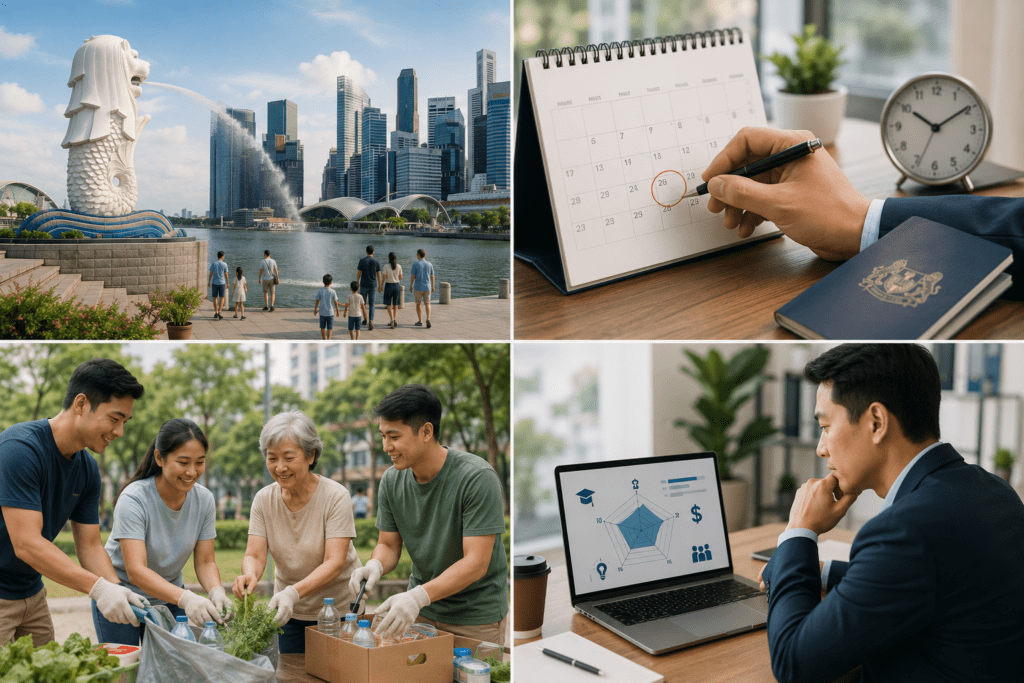
While waiting, you can actively strengthen your profile. Participate in community events, continue career growth, and keep your professional records updated. Updating your LinkedIn profile or other portfolios can also highlight ongoing contributions.
It’s wise to prepare a reapplication plan in case of rejection. Using this time to enhance your PR eligibility, contribute to the community, and maintain clean records sends a strong message during future reviews or appeals. Seeking guidance from Singapore PR application consultants can also clarify which steps will improve your chances.
Specific steps to strengthen your profile while waiting
-
- Community participation: Volunteer work, grassroots involvement, and contributions to local organisations reinforce your integration into Singapore society — a key ICA assessment factor.
-
- Career documentation: Keep employment records updated. Promotions, salary increases, and expanded responsibilities during the wait are relevant to your case.
-
- Tax and financial records: Ensure your most recent Notice of Assessment and CPF contribution history are in order.
-
- Social ties: Document family connections to Singapore, children in local schools, property ownership, and long-term plans that demonstrate commitment.
Navigating the PR application timeline can feel like a long and uncertain journey, but understanding what to expect and what delays really mean can make the process much more manageable. Remember that longer waits often reflect thorough review rather than negative outcomes, and the waiting period is a valuable opportunity to strengthen your profile, contribute to the community, and prepare for any future steps. Patience, preparation, and staying informed are key to making your PR journey smoother and more successful.
5. Singapore PR in 2026: Key Policy Changes That Affect Your Application
Understanding the current policy environment gives your waiting period important context. Several recent developments affect how ICA processes applications in 2026.
-
- Increased PR intake target: The government plans to welcome approximately 40,000 new PRs per year over the next five years, slightly up from the 35,264 granted in 2024.
-
- Re-Entry Permit (REP) rule change (from 1 December 2025): PRs overseas without a valid REP now have 180 days to apply before losing PR status permanently. This reinforces ICA’s expectation of genuine long-term commitment.
-
- Greater emphasis on integration signals: Recent assessments place more weight on social integration, community ties, school enrolment, long-term residency, alongside economic factors.
-
- COMPASS scoring for Employment Passes: While COMPASS governs EP eligibility rather than PR approval directly, applicants with stronger COMPASS profiles tend to present more clearly qualified PR cases.
6. How Processing Time Varies By Profile Type
Different applicants profile experience the Singapore PR timeline differently. Here is what to generally expect based on your situation:

Employment Pass (EP) and S Pass holders
The largest group of PR applicants. Standard timelines of 4 to 9 months are typical for those with clean employment records, stable tenure, and strong CPF contribution history. Cases involving frequent employer changes or salary near the minimum EP threshold may take longer.
Self-employed applicants and entrepreneurs
Business owners applying under the PTS scheme tend to experience longer wait times , often 8 to 12 months ,due to the additional documentation required to demonstrate economic contribution and business viability.
Spouse and children of Singapore citizens or PRs
Family-based applications are assessed alongside the anchor PR or citizen’s profile. Cases with complex marital or custody situations may require additional review.
Applicants who have previously been rejected
Reapplicants are assessed entirely on their current submission. ICA does not carry forward negative weighting from a prior rejection, but reviewers will closely scrutinise the profile for the gaps that may have caused the earlier outcome.
Frequently Asked Questions About Singapore PR Processing Time
These are the questions our consultants at Singapore Immigration Partners are asked most often about the PR timeline.
Q: How long does Singapore PR processing take in 2026?
A: ICA officially states 4 to 6 months, but in practice many applicants wait 6 to 12 months. No significant change to processing speed is expected in 2026 despite the increased intake target. Your individual timeline depends on profile complexity, document completeness, and ICA’s internal workload.
Q: Can I check the status of my Singapore PR application?
A: Yes. You can check your application status through the official ICA e-Service portal using your Singpass login. ICA does not provide interim updates during the review process, but the portal will reflect any status changes as they occur.
Q: Does a long wait mean my PR application will be rejected?
A: No. There is no direct correlation between wait duration and outcome. Longer processing often indicates a more thorough review, not a negative decision. Many successful applicants waited 9 to 12 months before receiving approval.
Q: Should I inform ICA if I change jobs while waiting for PR approval?
A: Yes, if the change is significant. A change in employer, job scope, or income during the waiting period can affect your assessment. Consult an immigration specialist before submitting any updates, as how you present the change matters.
Q: What happens if my Employment Pass expires while my PR application is pending?
A: Your PR application does not lapse if your EP expires during the review period, provided your stay in Singapore remains legal. You will need to renew your EP or obtain a relevant pass to continue living and working in Singapore while the review is ongoing.
Q: How many times can I apply for Singapore PR if I keep getting rejected?
A: There is no official limit on the number of PR applications you can submit. However, reapplying without addressing the weaknesses in your previous submission is unlikely to produce a different result. Professional guidance between applications is strongly recommended.
Get Expert Support for Your Singapore PR Application
If you want expert guidance to optimise your chances and navigate every step confidently, reach out to Singapore Immigration Partners. Our experienced team can help you understand permanent residence application requirements, ensure your PR application is complete, and provide personalised advice tailored to your circumstances.
With over 10 years of experience and more than 1,500 five-star verified reviews, we are one of Singapore’s most trusted PR application agencies. Whether you are preparing a first application, managing a long wait, or considering a reapplication after rejection, we are here to help.